
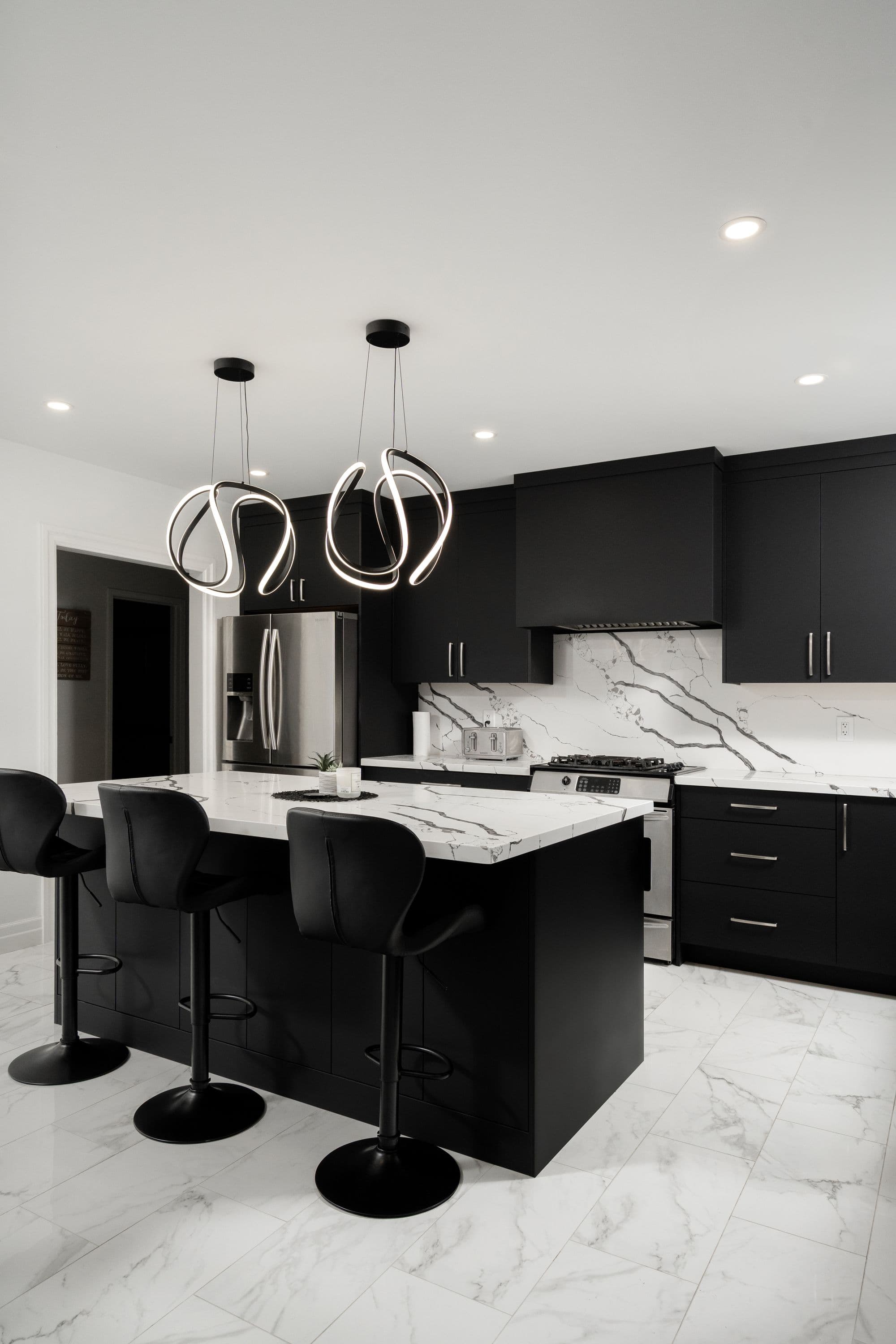
The kitchen island has become the centrepiece of modern kitchen design - part prep station, part dining table, part social hub. But designing an island that looks great and functions perfectly requires careful planning. Here's what you need to know.
Do You Have Room for an Island?
The most common island design mistake is making it too large for the space. As a rule, you need at least 36 inches of clearance on all sides of the island - and 42-48 inches is better for high-traffic kitchens. If your kitchen is narrower than 12 feet, a full-size island may not work; consider a peninsula or a narrow prep island instead.
Island Sizing
A standard kitchen island is 4 feet long by 2 feet deep, but custom allows you to go bigger. Our most popular island size is 8-10 feet long by 42-48 inches deep - large enough for prep, seating, and storage without overwhelming the room. For entertaining-focused kitchens, we've built islands up to 14 feet long with multi-level countertop optionss and integrated sinks.
Island Countertop and Lighting Considerations
Your island's countertop is its most visible surface. Waterfall edge designs using Caesarstone or Cambria quartz create a dramatic statement, while butcher block adds warmth to traditional kitchens. For a detailed comparison of surface materials, see our countertop materials guide.
Pendant lighting over the island is one of the most impactful design choices in any kitchen. Our kitchen lighting guide covers pendant placement, sizing rules, and how to layer task and ambient lighting for the perfect balance.
Seating Options
If your island will include seating, plan for 24 inches of width per person at counter height (36 inches) or bar height (42 inches). An overhang of 12-15 inches provides comfortable knee room. For a family of four to sit at the island, you'll need at least 8 feet of seating length.
Storage & Features
A custom island can include deep drawers for pots and pans, pull-out recycling/waste bins, built-in wine racks, open shelving for cookbooks, microwave or appliance garages, prep sinks, and even dishwashers. The key is designing around how you cook and entertain.
Waterfall Edges
One of the most popular design features we're building right now is the waterfall edge - where the countertop material continues down the side of the island to the floor. This creates a dramatic, high-end look and works especially well with statement materials like marble-look quartz, natural stone, or richly grained wood.
Two-Tone Islands
Another trending approach is using a different colour or material on the island than the perimeter cabinets. A navy blue island with white perimeter cabinets, a natural wood island in an otherwise painted kitchen, or a dark charcoal island contrasting with pale grey surrounds - these combinations add depth and visual interest to the design.
Ready to start your project? Book a free consultation with our design team, or call us at (705) 726-1711 to discuss your vision.